As a core banking system, Avaloq allows banks to run and manage their fundamental (or core) operations and processes. These include book- and position-keeping, payment processing, client relationship management, client onboarding, accounting, tax reporting, and compliance.
Given the monolithic nature of the system, meeting the ever-growing regulatory demands as well as evolving client expectations proves to be a challenge. This is why for the past decade or so, we have seen a rapid increase in the use of third-party services and solutions, typically with some kind of automated data transfer to and/or from Avaloq.
In this short blog post, I would like to illustrate how, during a recent project, a new regulatory reporting requirement was implemented in Avaloq in a time-efficient and pragmatic manner.
EMIR REFIT
The European Market Infrastructure Regulation (usually just called EMIR) was adopted over a decade ago with the stated goals of increasing the level of transparency and reducing systemic risk in the derivatives market. The latest overhaul to this regulation is EMIR REFIT, which went live at the end of April.
I joined a team of developers and analysts, both internal and external, who had been tasked with bringing the daily derivative transactional reporting of a client – a private bank based in Switzerland – in line with these latest regulatory fitness requirements.
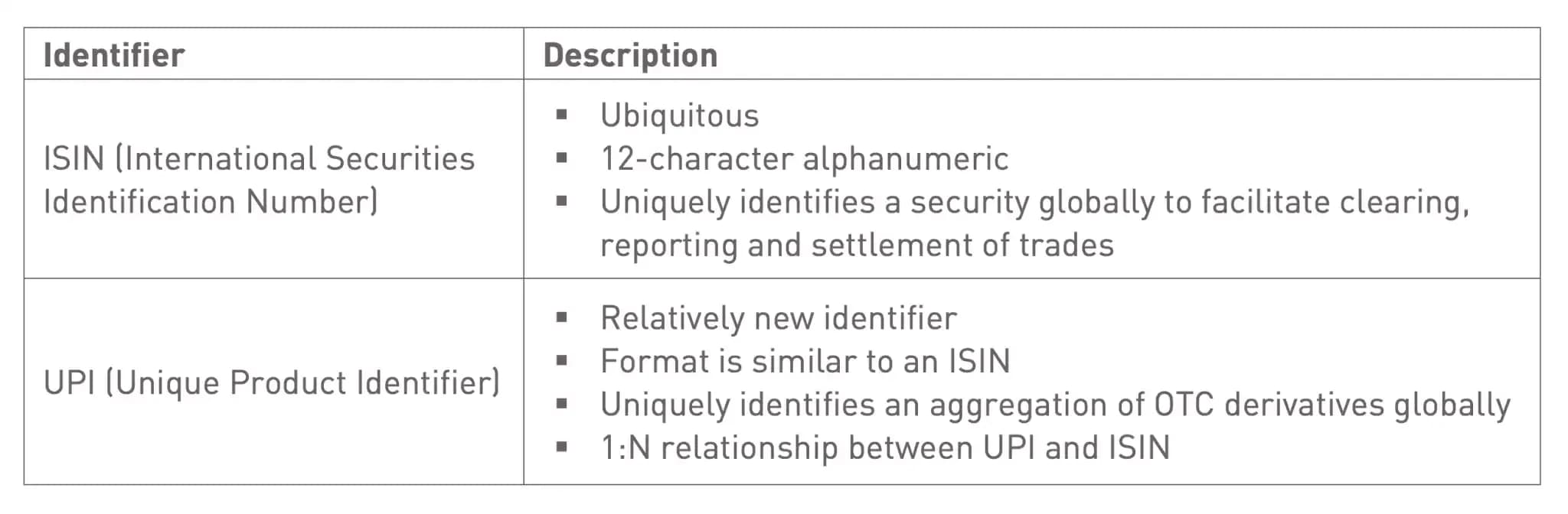
Among many other changes, the “refit” addressed the topic of product classification, which has caused ambiguity in the reporting of over-the-counter (OTC) derivatives in the past. The new requirement was thus to be able to report ISIN and UPI identifiers for potentially any OTC derivative product. rst als abgeschlossen markiert, wenn die Bestätigung einer erfolgreichen Verarbeitung (3) vom Endpunkt zurück zu Kafka gelangt (4).